Whether you start sport as a kid or enter the gym as an adult, you’re introduced to important exercises that stand above the rest. If it’s not doing push-ups or pull-ups, you’re told to do squats to improve your leg strength and size. Now, you should always start with bodyweight squats, but what’s next? When you start getting better, you get introduced to the barbell squat, but in many ways, it’s a different exercise. Novice lifters have so much information thrown at them from the start that they don’t particularly know where to begin in the first place. Even though there are many squat variations out there, we want to focus on the popular barbell squat.
Here are 6 areas of focus that will help you improve your barbell squat:
High-bar vs Low-bar Squat
High-bar and low-bar position squats are both legitimate ways of doing the movement, but it might just depend on your goals when choosing which one to use. It often comes down to more athletic sports like weightlifting and powerlifting, or if you’re focusing on muscle building and bodybuilding.
High-bar squat: The most common variation of the barbell squat, it is recognised by a bar sitting more on the traps just below the neck. Also, you will have a more upright torso, lower hips, and shoulder-width stance position. This variation has you squatting “ass to grass”, ensuring you’ve got a deep stretch in your quads, maximising muscle growth.
Because you’re resting the bar on your shoulders, you’re not using your arms to hold it up as much. The weight is lighter but you’re able to get more full range of motion reps without taxing your lower back. Other than being perfect for bodybuilders looking for big quads, the low bar squat is often used for more movement-intensive sports like Olympic lifting and sprinting.
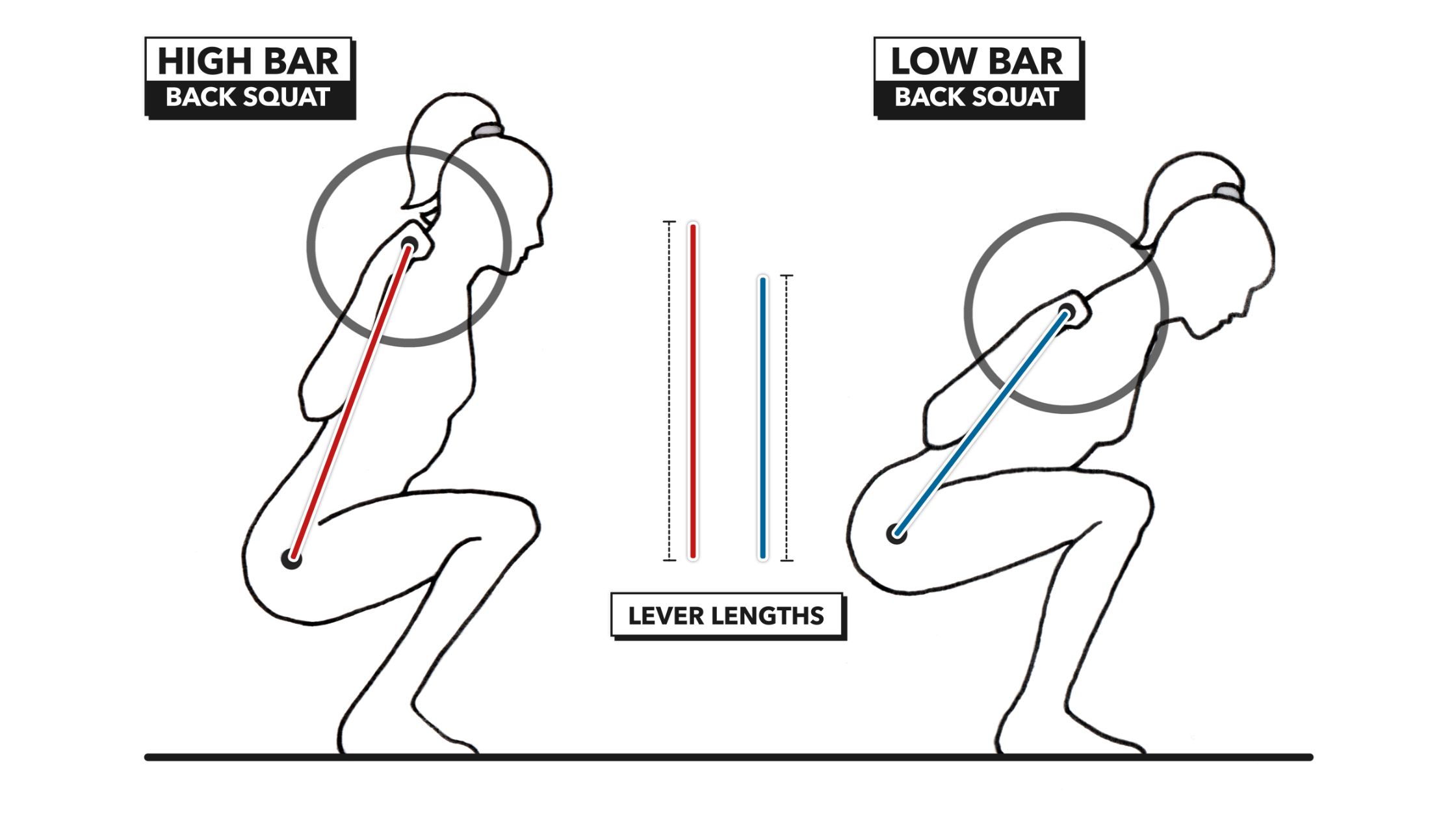
Low-bar squat: The low-bar squat is a more niche movement. It is often used by strongmen and powerlifters due to the ability to generate more strength from their squats. The bar position is on the posterior deltoids and spine of the scapula. It naturally gives the athlete a more horizontal torso position, hips pushed further back, and a wider stance. The movement generates more force from the posterior chain in the hamstrings and glute muscles but also has less strain on the knees due to the angle they are at the bottom of the movement as seen in this study from 1996.
If your goal is pure strength and power, like powerlifting, the low-bar squat is for you.
You can utilize both of these movements during a training program, but you have to choose which to use more often depending on your goals.
Elbow & Hand position
The position of your elbows and hands will link directly to the bar position you use during your squat. It also comes down to flexibility and mobility. Strongmen and powerlifters who use the low bar squat can be less mobile in their shoulders than other, more mobile athletes, purely due to their competitive events. So, during the set-up of the squat, their hands will be further apart to be able to get the bar into the lower position. However, their elbows will still be tucked in and under the bar as much as possible for stability.
When doing the high bar squat, it is easier to set up the elbows right underneath the bar, tucked into the lats with a narrower hand position. Athletes will find this position much easier to get into due to shoulder mobility and wider range of motion.
The walk-out
You want to stay as stable as possible when doing your squats. Taking too many steps out of the rack not only wastes energy but will destabelize the barbell on your shoulders and can hinder your brace. When you’re about to lift an exceptionally heavier weight, you want to have confidence in your balance.
You want to take two large steps out of the rack. You can also do two and a half steps to adjust your stance if needed. This ensures efficiency and optimal balance for lifting.
Squat stance
Dialing in your squat is a process of trial and error, and the position of your feet is one of those tough decisions to make. The most basic thing to remember is that you want your thighs to follow the angle of your toes, but this can also change in some cases. It’s all about comfort in the ankles and hips. Here are 3 things you can do to help you get the right stance.
- Your feet are flat on the floor.
- Your hips are comfortable, i.e. no pinching or pressure). Find a position in which the hips move the most freely.
- Each thigh is approximately parallel with the corresponding foot, if you look straight down from above one thigh, your foot is in line with it.
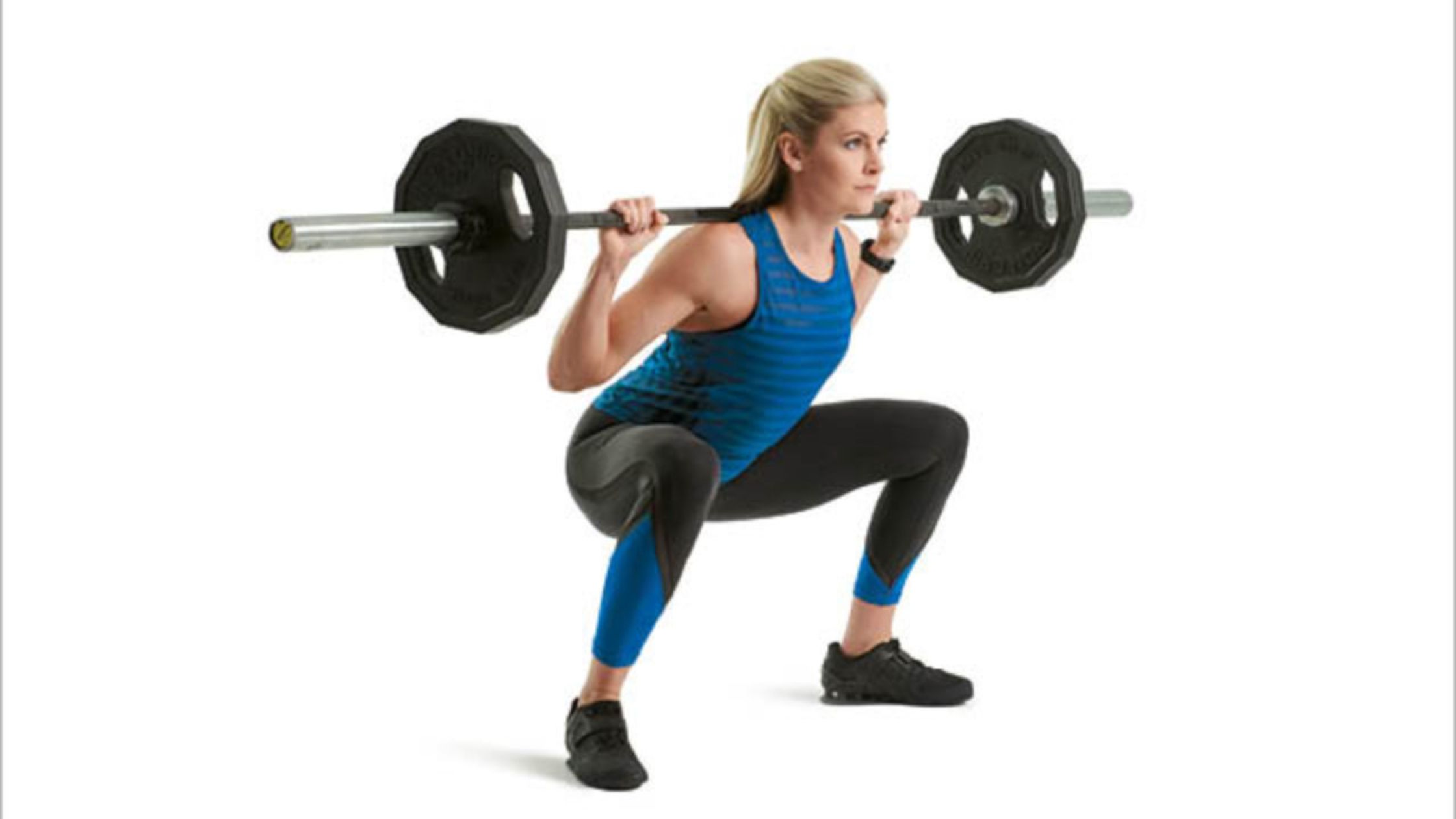
However, this can also change according to the type of squat you’re doing. Often, the lower the bar position, the wider the foot stance due to the more horizontal torso position to give more space. The wider foot position also helps with the leg drive which is activated by the more pronounced hip angle.
Squat speed
In recent years it has been studied and corroborated that using the slow essentric phase of the movement has the best stimulus for muscle growth. Slowing down the lowering phase of your squat and going as low as possible not only stretches your targeted muscles like the quads but increases time under tension. These factors can help you build bigger and stronger muscles with your squats.
Powerlifters on the other hand will lower themselves more quickly into the squat to use the rebound from their knees and hips to force themselves back up. However, moving too quickly can hinder strength and power.
The Force/Velocity relationship is a straightforward method of showing how two variables impact each other, and in this case, your squat speed versus power output. If you want to know more, you can check out this link here for more details. In short, it shows that the more speed you have, the less force you can generate in your squat. You don’t want to drop down into the squat so quickly that you lose balance or power in the second phase.
Squat depth
When doing the squat, the goal should always be to go as low as possible. Exceptions to the rule will be those who are brand new to the movement, those with an injury, or somebody with a disability that doesn’t allow them to go low enough. Getting a squat as low as possible is going to be much easier with the high-bar squat position.
With your foot position sorted, bracing correctly and a slow lowering phase, you want to squat so low that your hamstrings touch your calves if possible. It might take longer for some to get into this position with their back staying neutral and hips feeling comfortable, but progression is the aim of the day.
While doing full range of motion squats should be the goal for most people, especially starting or building the most muscle, there are exceptions. If you’re working towards power and doing the low bar squat in competition, the goal is to only have your hip crease below your knee cap.
These six tips to maximise your squat are mere suggestions but they provide a great starting point for those just starting. If you’re a more intermediate athlete, this might be the baseline to revert to if your squat isn’t progressing as much as you would like.
 Cyclops Creative