How to be sure you’re training hard enough

Are you training hard enough?

We all exercise or train to become better versions of ourselves but we don’t always know how to get better. Years of experience in the gym and other training environments have shown that many people exercise, but most don’t do enough to get real results.  Exercise and training are there to push your body past limits so that it can adapt to the load, making you physically and psychologically stronger and fitter. However, there is also a chance of doing too much.

There are three main variables you can change to dial in your training to get fitter, stronger, or bigger.

Training volume

Volume is often inaccurately described as the duration of the training, however, it’s the quantity of activity performed during training. “It is the primary component of training because it’s a prerequisite for high technical, tactical, and physical achievement.” (Periodization, T.O. Bompa & G.G. Haff). The specifics of the volume will always depend on the sport or activity. For endurance athletes, the main component measured is the distance covered. Resistance training and weightlifting will measure the accumulative weight lifted during a workout (Volume Load = sets x reps x load in kg).
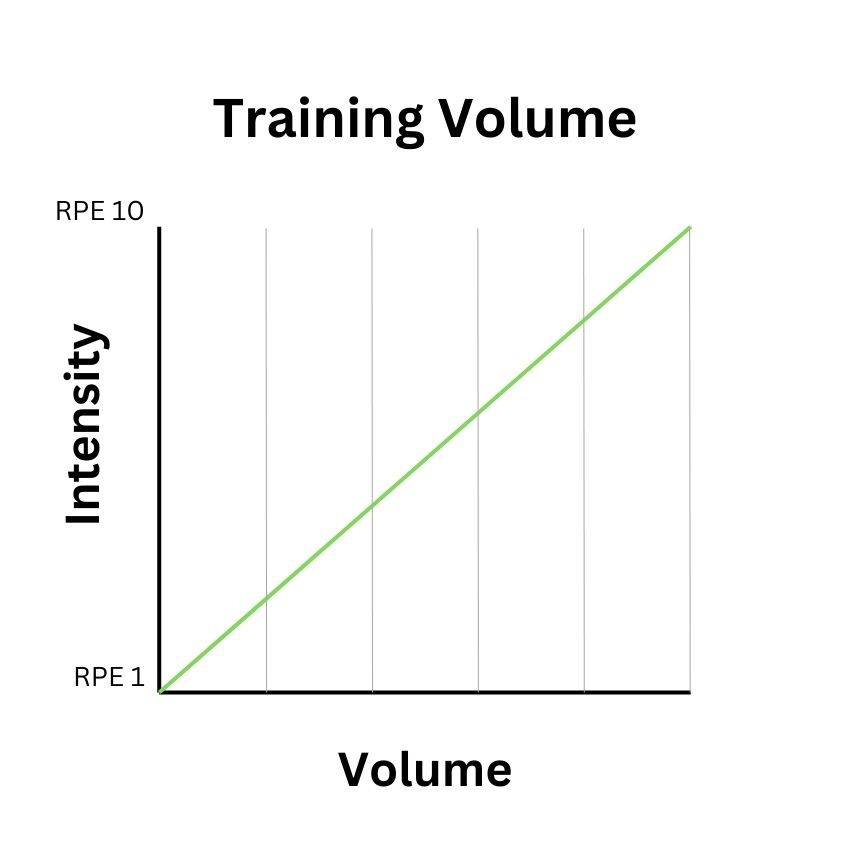
Training Volume graph
Training Volume

How can you increase training volume?

  • If you’re an endurance athlete work on increasing the distance covered per run or week.
  • Each week, try to add an extra rep or two to each set.
  • If you are building more capacity, add another full working set to the exercise.

To add volume, you’ll be adding distance, sets, and reps to the workout. Doing a higher volume workout will impact your recovery time between workouts.

Training Intensity

Where volume is the quantity of work during training, intensity can be seen as the quality of work being done. With relation to resistance training, intensity can be seen as the energy expenditure or work per unit of time. i.e. workout). The more work you do during a workout, the higher the intensity and fatigue accumulated. However, intensity also has a psychological component whereby your ability to handle and overcome mental challenges during a tough workout or training segment.

intensity is measured differently between sports and activities. Endurance athletes will look at average heart rate as they run, cycle, or row. Maximum heart rate will also be used during resistance training but power output will become increasingly important.
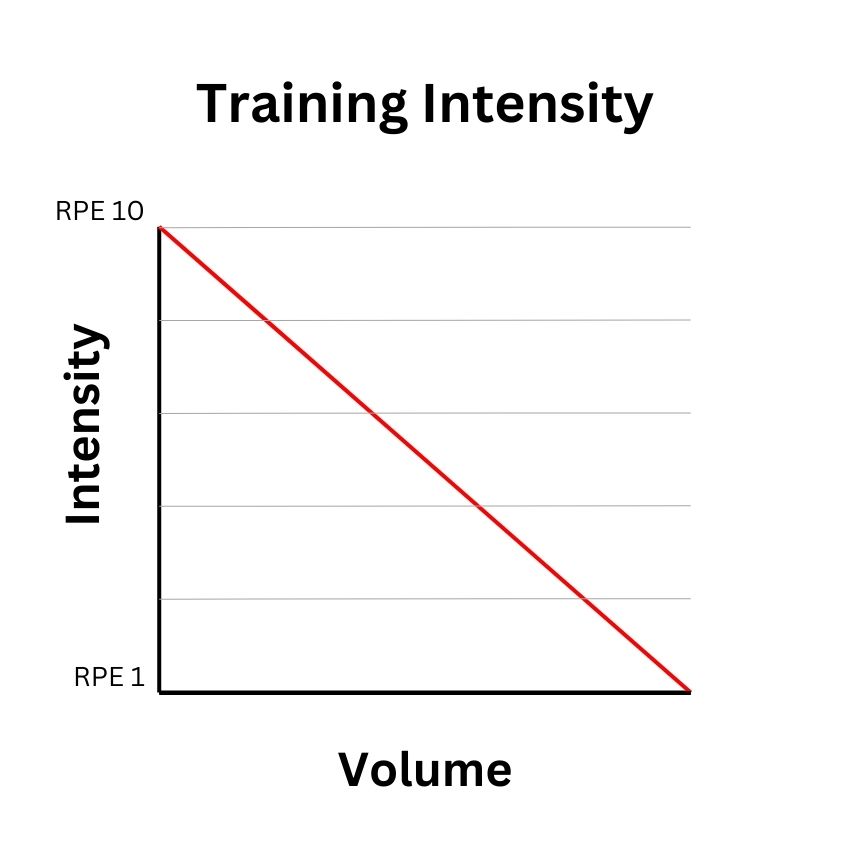
Training Intensity graph
Training Intensity

There are two easy-to-follow methods of assessing intensity when training.

REP (Rate of perceived exertion)

Training hard is very relative and you need to find your “sweet spot” for training. Each level of RPE is a guide for progression. Each intensity zone has its uses whether you’re training for endurance or weight training.

RPE Scale:

  • 1-4: This is where you’ll be warming up. You’ll either be jogging very slowly or doing mobility exercises, getting a light sweat.
  • 5-6: The warm-up and speed set intensity. Low intensity and moderate weights that slightly work the muscles to prepare for main activities or work on explosiveness. Endurance athletes will be able to chat but with laboured breathing.
  • 7-8: This is your working capacity. You’ll be doing your working strength sets or running but with shortness of breath and talking in short sentences.
  • 9: Pushing hard and barely able to maintain the intensity of the exercise. Reps are slowing down and form is becoming worse—barely anything left in the tank.
  • 10: You’ve pushed so hard that there is no way you can do another rep. Systemic and muscular failure happens here. Not recommended too often.

While RPE is great for endurance athletes, it can split those doing resistance training. RPE is perfect for powerlifters who work according to their maximal efforts. They tend to work with lower weights at higher intensity.

RIR: Reps in Reserve

If you want to build muscle, you could use the RIR method for your workouts. These are the reps in reserve for each set. It can be tricky to figure out, but so does the RPE scale. The more you use it, the better you’ll get.

You don’t want to start a new training block too heavy, so training each set to about 3 RIR is a good start (this could change in the final set). By adding weight each week, your reps in reserve will decrease and you’ll progressively get stronger.

Ways of altering intensity:

  • Increasing the speed over time or quickness of a specific exercise. E.g. running faster
  • Increase the weight lifted for an exercise.
  • Decreasing rest times between sets and exercises.
  • Performing endurance, interval, and tactical exercises at a higher % of maximal heart rate.
  • Have more intense training weeks before adding a deload week as part of a training block. E.g. 3;1 block to 4:1 training block.

Training Density

Training density is going to involve how often you’re training. The frequency of your workouts will depend on your training intensity and your recovery. If you’re recovering long before the next workout, you might consider adding another workout to your week. However, depending on your goals and program, increasing training frequency will look different to somebody else.

How to adjust training density:

  • If your muscles recover a few days before the next workout, adding another workout for that muscle group could improve adaptation. E.g. Training legs 2-3 times a week instead of once.
  • Have more speed sessions or longer runs during the week if you’re an endurance or track athlete.

Relationship between Volume and Intensity

There is a trade-off between volume and intensity. You can add all of the reps and sets you want, but it will impact how heavy you can load the bar. You can also run far but you won’t be running as fast as possible.

Optimal Volume and Intensity

If you’re building muscle, you will be adding loads of sets and reps to your workout to stimulate muscle growth, but you won’t be training very heavily. If you’re training for strength, your reps will be lower, rest times longer but the weight will be much heavier. You want to find the perfect zone for your specific goals.
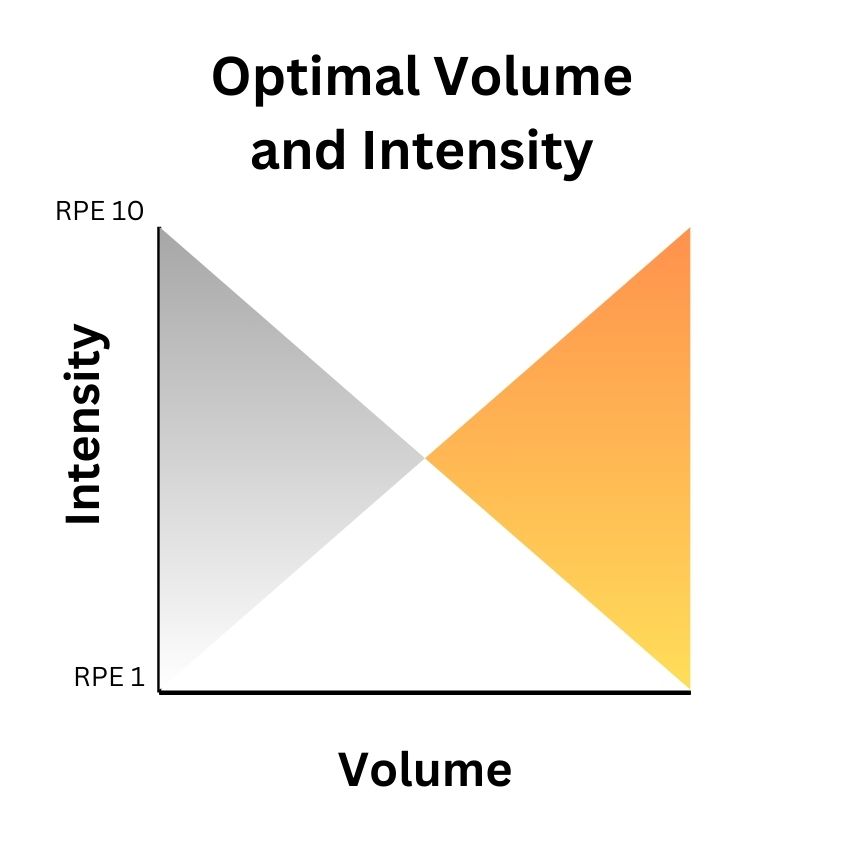
There is no special variation that suits everybody, which is why well-planned programs make such a big difference.

Avoidable Volume and Intensity

There are two more scenarios that you don’t want to find yourself in. These are often determined by no training plan, trying to follow elite athlete intensity, or being unable to train very hard.

You’ve got the group who often starts too heavy, always trains to failure and ego lifts with way too much weight on the bar. They load the intensity and increase the volume so much that they’re sore for a week, train with a sub-optimal range of motion, and increase the risk of injury.  This approach can also lead to overtraining.

The second group is often the beginners. They are unsure how to train effectively and/or worry about injury or muscle growth way too much. Unfortunately, this is also the zone, where for most of history, women were told to train because otherwise they’ll get bulky. This group of individuals exercise, but not hard enough to make any gains or they get them very slowly.
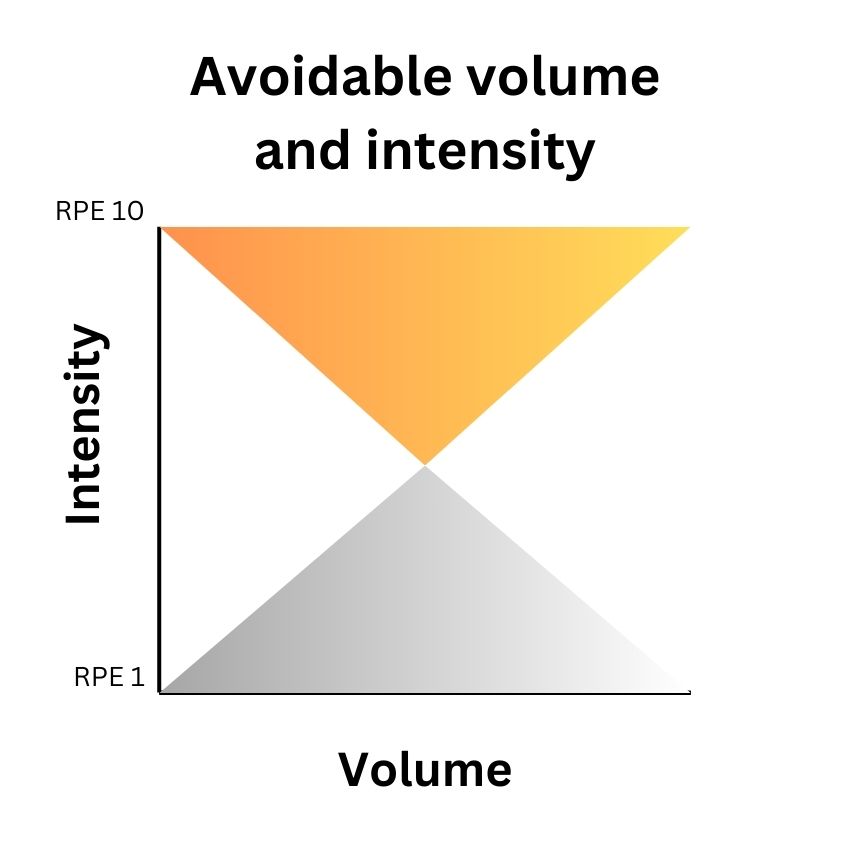
These two scenarios are avoidable because they’re quite easy to fix with correct education and programming.

Final Thoughts

Understanding the relationship between volume, intensity, and density can help you make those gains you want so much. You want to train hard and often enough to stimulate your muscles and nervous system but not so hard that you get hurt. You also want to ensure that you’re doing exercise at a high enough volume and intensity to make any gains at all.

These variables are changeable for the individual and individual goals, so take the time to learn and enjoy the process of getting fitter and stronger.  

Written by Gary Dunn a.k.a. @geekphysique_za
Can’t find a deadlift bar? Try these 10 alternatives

Conventional Deadlift

Deadlifts are often acknowledged as one of the primary lifts for strength or hamstring, glute, and back development. Being able to lift a heavy load off the floor is also one of the ultimate tests of strength, but what if there are no barbells available or you want to change things up for a while due to an injury or general training plateau? It’s great to change things up once in a while and if you’re set on doing a deadlift-style exercise, there are various options for you.

Conventional deadlift

First, let’s consider the conventional deadlift form. Even though cues will vary depending on the coach and individual, there are some basics to remember:

  1. Feet: Hip width apart and toes pointing almost straight forward.
  2. Shins: The Bar should be just over the midfoot and when grabbing the bar, should be pulled against the shins.
  3. Grip: Hands should be just wider than the feet at shoulder width. (Knees and thighs should push against the inside of the arms)
  4. Back:  Lock your back in slight extension (lumbar and thoracic).
  5. Brace: Breathe into your abdomen and push your stomach, obliques, and back outward as if you’re about to get punched in the gut. If you have a belt, all sides should feel pressure.
  6. Shoulders: “Set” the shoulders and position the shoulder joint right over the hands.
  7. Shoulders > Hips > Knees: Shoulders are higher than the hips and the hips are higher than the knees.
  8. Drive through the feet and push your hips towards the bar as you pull it off of the floor. (Hips should not rise above the shoulders early).

The deadlift is a full-body exercise but it does emphasise the hamstrings, glutes, and erector spinae muscles of the back. Accessory muscles will include the quads and upper back muscles.

Non-barbell deadlift alternatives (heavy)

Trap bar deadlifts

What if you can’t find a barbell for deadlifts or you just want an alternative for a new training block? There are some non-barbell alternatives when you still want to lift heavier weights with a similar form pattern to conventional deadlifts. However, not all gyms will have these pieces of equipment.

Belt squat machine deadlifts:

Another piece of specialized equipment that has become more popular. Grab a wide-grip lat pulldown handle and attach it in place of the belt. This deadlift variation will often work similarly to the deficit deadlift due to the depth possible with most brands. You’ll also be able to have constant tension at a greater range of motion before reaching the bottom.

Just doing belt squats are also a great alternative for building leg size and strength, especially if you can’t overload your spine with a heavy barbell.

Non-barbell deadlift alternatives (light):

What if you want some of the benefits of deadlifts without needing to lift heavy? These alternatives are great for the general gym-goer, those with injuries, or if you just want a movement-specific warm-up before doing heavy deadlifts.

Kettlebell or Dumbbell deadlift

For many, the barbells are often in an area of the gym they want to avoid or they don’t have a barbell at home. Some people also just started training, so want an accessible piece of equipment to do lots of reps with. You can use either a narrower stance with the weights by your side for more quad engagement similar to a trap bar or have a wider (sumo) stance with the weight in front for more glute activation. This variation is also great for getting a full range of motion similar to creating a deficit.

Credit: Onnit

Single-leg deadlift

If you’re training at home with lighter weights or want to target your hamstrings and glutes even more, single-leg deadlifts are great. By focusing on one leg at a time, you can use less weight and target one leg more effectively. This variation is also great for learning to keep your hips more stable as you hinge forward.

Don’t be afraid to lightly hold onto something for balance because you want to target the muscles and not worry about falling over.

Bulgarian split-squats

Everybody’s favourite exercise is here, right? Not only is this a perfect exercise for developing the legs, but it can also help you with improving other exercises. Even with lighter weights, Bulgarian split squats can make the legs work very hard, but it is important to work past the discomfort. If you use a full range of motion, you’ll work the entire posterior chain as well as the quads in front.

The leg drive on the front leg helps you activate as many muscles as possible while also improving the strength and mobility of the hip flexors on the back leg.

It’s also great as a warm-up or potentiation exercise for a heavy deadlift workout.

Credit: Squat University

Non-conventional deadlift with barbell

What if you had a barbell but you wanted to change things up a little bit? The conventional deadlift is great but people often have “sticking points” in different areas of the lift or just want to directly target different muscles.

Sumo deadlift

The step-child of all deadlift variations, the sumo deadlift is still top of many lists. It is also allowed in most powerlifting federations. But, why would you want to try out this variation?

Due to the wider stance, you are using even more of your hamstrings and glutes to lift the weight. If perfected, you could lift more weight than you would doing a conventional lift. There are some pros and cons though:

  • Even though you’re targeting the posterior chain even more, the range of motion is reduced, meaning that muscle growth is hindered. A fuller range of motion has been scientifically shown to provide more muscle growth.
  • It’s useful for lifters with long femurs (thighs).
  • Potentially more reps at heavier weights.
  • Most people in the gym will judge you for lifting sumo.

Stiff-leg deadlift

Do you want to target your hamstrings even more? As we know, muscles get their best growth stimulus in the lengthened position. Doing stiff-leg deadlifts or Romanian deadlifts (RDLs) are a great way to target the hamstrings. However, stiff-leg deadlifts are better for power generation than they are for pure muscle growth.

With this variation, the exercise starts from the floor like a regular deadlift. You want to have your knees bent very slightly but your hips high and your shoulders ahead of the bar. Hips should still be pushed as far back as possible with the hamstrings stretched. Generate power from the floor, but keep the bar close to your body and hinge at your hips instead of the knees. Remember, you won’t be lifting very heavy and the slow essentric (lowering phase) should still be slow and controlled with shoulders pulled back and chest open.

Romanian deadlift

The technique is almost exactly like the stiff-leg deadlift but the movement starts at the locked-out position. Hinge at the hips and lower the bar as slowly as possible with knees only slightly bending later on. Slow lowering phase and athletic pull back to the top but touching the floor isn’t the goal. Your hamstrings should feel almost all of the stretch and contraction with a slight pause at the bottom.

Credit: Squat University

Deficit deadlift

If your sticking point with the conventional deadlift is getting the initial pull from the floor, you could try adding a deficit. This is where you either stand on a small elevated platform or use smaller plates to get the bar lower.

Having the bar at a lower position forces you to have your hips lower, overload the initial pull position, activate more of your leg muscles like the quads and work past the difficult part of the movement.

Start with just about 5-10cm elevation like standing on some flat bumper plates.

Rack pulls/Box pulls

The opposite of deficit deadlifts, these are often used to help get past the knees. If you struggle to lock out your deadlift, have the bar on the safety pins of the power rack or boxes. The bar is usually just under the knees to help you lift more efficiently at the sticking point.

Where deficit deadlifts are usually lighter, rack pulls tend to work better at a heavier weight. You’ll be activating more of your hips, glutes, and back muscles here. The range of motion is very short, so it’s not advised for muscle building, but an accessory for power and deadlift strength.

Be aware, that dropping the bar in a rack will potentially be a bad idea for keeping your bar in good shape. Having the weight rest on boxes is a better idea. However, rack pulls will have no slack in the bar, and box pulls will, like a regular deadlift.

Which should you choose?

The deadlift might be one of the best tests of true strength but not everybody needs to lift anything near maximal weights. If you’re not competing in a sport that tests the deadlift directly or you just want to be as strong as possible, you don’t need to do them.

Any of the other variations like RDLs, kettlebell deadlifts, Bulgarian split squats, and others mentioned above are perfect for muscle building and still increasing strength. It will all depend on your goals and ability to perform the movement most effectively.

Written by Gary Dunn (@geekphysique_za)

How can women start feeling comfortable in the gym?

Group of women with confidence training together

The world of health, fitness, and well-being is supposed to be a non-judgemental place with support coming from all over, but we all know that it’s a falsehood. With anonymity due to social media feeds and a whole lot of misogyny, and bruised egos, women keep getting bullied for looking after themselves and being strong. We could expand on this topic but we would be here for days.

So, let’s band together and find ways women, especially beginners, can feel more comfortable in public fitness spaces, like gyms.

Spoil yourself with a gym outfit

Confidence starts with yourself and what often makes us feel confident is wearing something great. Whether you go alone or take your gym buddy with you, pick out some new gym outfits that you know will make you feel good.

Remember, it’s not how you look to others around you, but how you feel about yourself, and wearing something spectacular to you is a great start.

Find a gym buddy a.k.a. Accountability buddy

The gym can be a lonely place but having a friend with you can make a big difference. It’s easy to get distracted and feel self-conscious when you’re working out alone. But when you have a friend as a distraction, you won’t feel as judged as much as you “think” others are or as much as you judge yourself. The other plus-side is that they are going through the same workout as you.

“Being with someone you are comfortable with makes the experience less daunting and will provide an opportunity to build comradery and bond.” – Sarah Ezzideen

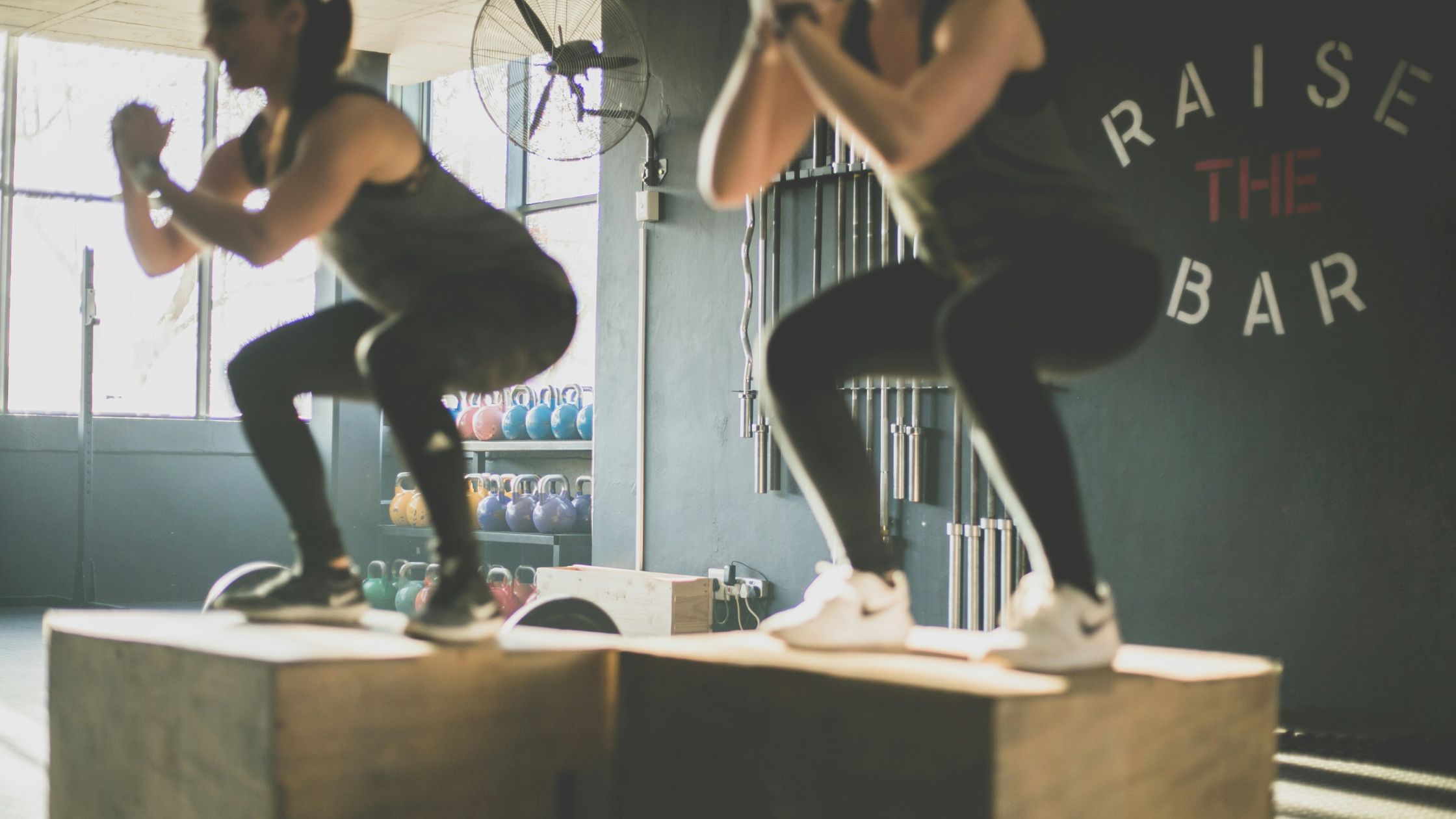
Women doing box jumps together
Having a friend to exercise with might be the best confidence-booster. Photo by Meghan Holmes on Unsplash

Not only do you have a friend going through it all at the same time but they can also help you get out of the house to go for a workout on those days you just don’t feel like it. An accountability buddy can also help you stick to your nutrition plan as much as the workout plan. This relationship becomes beneficial for both of you when it is your friend who needs some help.

Plan your workouts

When you’re in the gym and you don’t have a plan, you can start feeling self-conscious about what you need to do next. Feeling lost without a program not only makes you feel this way, but it’s also going to hinder progress.

In the digital age, there are countless apps and resources to find programs to train at home, minimalist gym equipment programs, or full-strength and muscle-building routines for when you start feeling more comfortable. If you’re getting even more confident in investing more time and money, a personal trainer can help you build a program specific to your goals and needs. Your new personal trainer can be in-person or online thanks to technology.

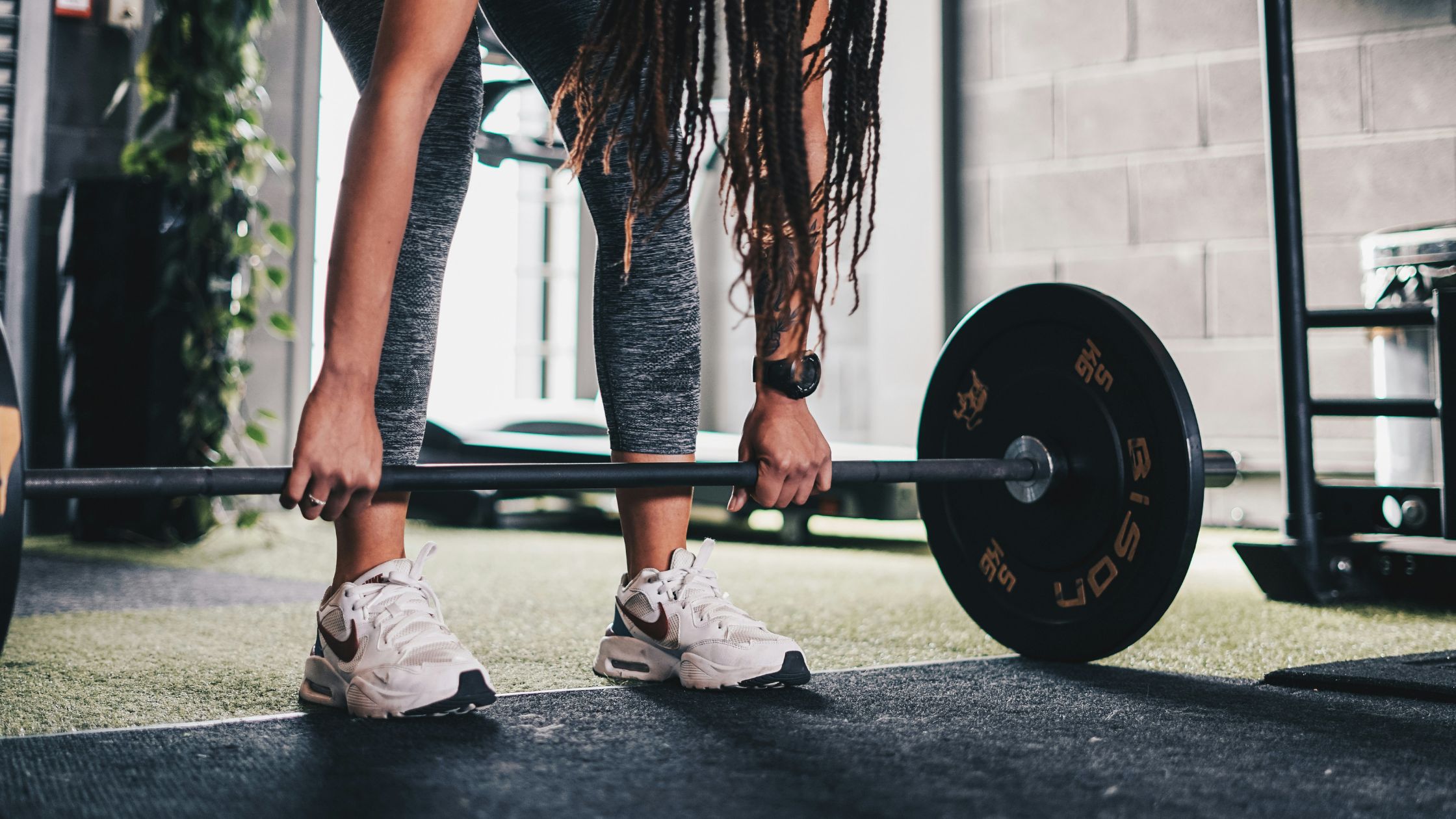
woman holding barbell with plates loaded while wearing fitness watch
Planning and tracking workouts can help you progress and feel more confident. Photo by Ambitious Studio* – Rick Barrett on Unsplash

These apps and videos can help you improve your form or help you learn about new equipment and exercises so that you don’t feel lost anymore.

Having a program can help you focus more on yourself and your self-confidence while also helping you make real progress which ends up helping with your confidence even more.

Headphones and tunes!

Music has a way of helping us get into the zone. Whether that’s to relax or feel confident in the gym.

When you’ve found or made a playlist of your favourite music, you can focus on it rather than what’s going on around you. Music helps you live in your own world, drowns out the rest, and can help you feel more confident. And if you get into the zone so much that you “bust a move” between sets, more power to you!

Don’t be afraid to ask for help

Almost everybody at the gym is going through the same thoughts as you. Almost everybody there is just trying to improve themselves and when they’ve been on the journey for a while, are always willing to give you some help.

women training together
Asking for help can provide you with knowledge and a lot more confidence in the long-term.

Whether you just want to find a machine, help with an exercise, or talk to a trainer, you’ll almost always find a friendly face who’s willing to help you. You might even find a new gym buddy in the process.

If you’re very shy, start by talking to gym staff and personal trainers. They’re there to help you.

Focus on positive self-talk

When your confidence is low, it can be easy to tell yourself some negative things, but what if you made an effort to turn them into positive statements?

Positive self-talk is a surprisingly powerful tool when you’re exercising. It can help you get out of bed, push yourself to do another rep, or celebrate small wins.

Practice positive self-talk and affirmations:

  • “I am strong, capable, and determined.”
  • “I believe in my ability to push through any challenge.”
  • “My body is powerful and resilient.”
  • “I am getting stronger with every workout.”
  • “I trust my body’s strength and endurance.”
  • “I am focused and committed to reaching my fitness goals.”
  • “Each exercise I do brings me closer to my ideal self.”
  • “I deserve to prioritize my health and wellbeing.”
  • “I embrace the process of growth and improvement.”
  • “I am proud of myself for showing up and putting in the effort.”
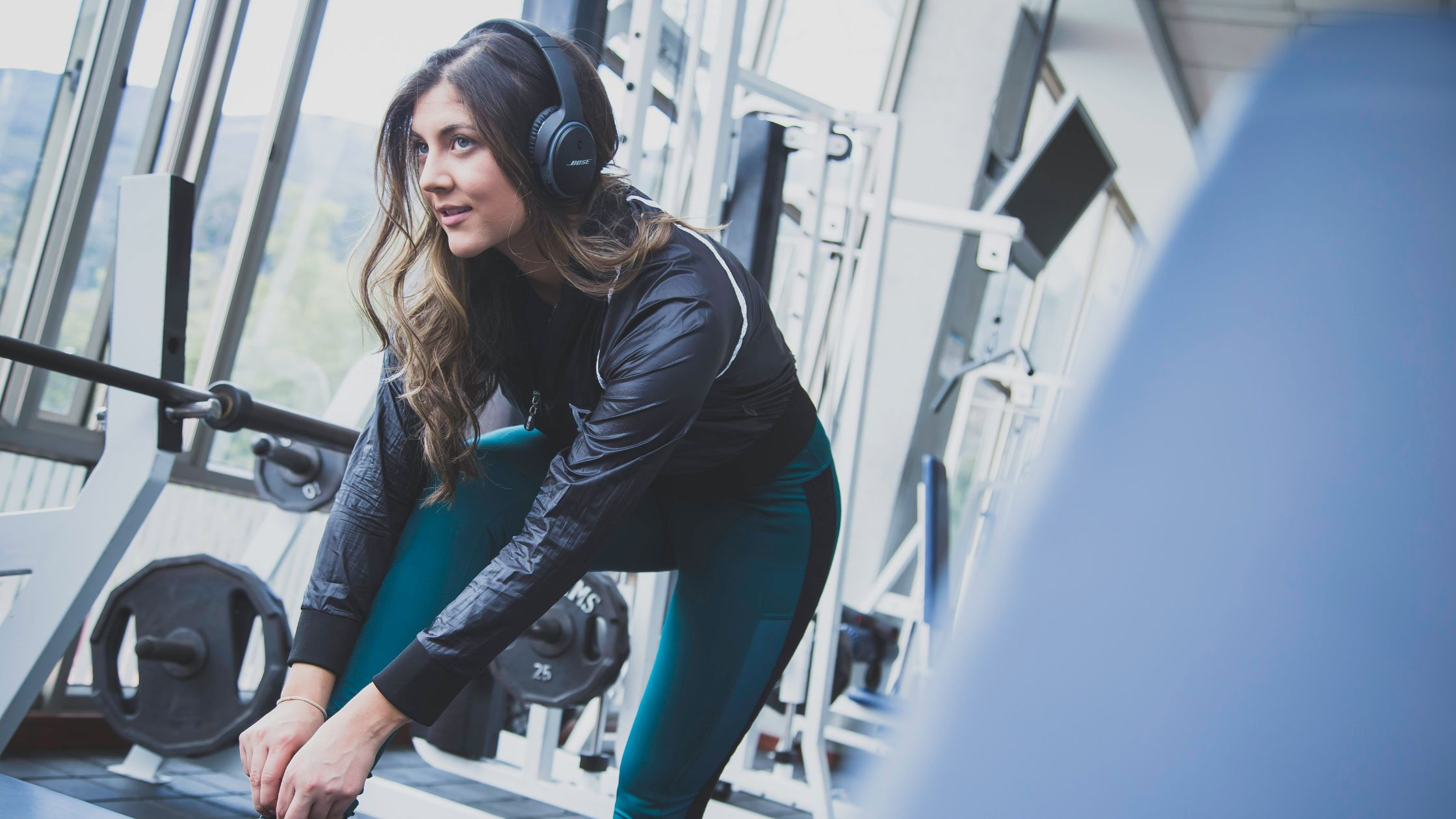
Woman tying running shoes while listening to music
Music not only adds positively to your workouts but provides you with a musical distraction. Photo by juan pablo rodriguez on Unsplash

Everybody had to start somewhere

If you realize that everybody has their journey, you can start focusing on your path and processes. You don’t even need to start in the gym or with structured workouts. You can go on walks, go cycling, join some outdoor training groups, etc.

You can even try all of them to find out what activity suits your personality and goals. If you focus on your goals while doing what you enjoy, you’ll find an ocean of confidence.

This article was written in-collaboration with qualified fitness experts Geek Physique and personal trainer, Sarah Ezzideen. You can find Sarah on Instagram HERE!

How to turn motivation into self-discipline

A man and a woman being disciplined with exercise

We’ve all been in the same spot at one time in our lives; that moment you realise that you want to change your life, and often it’s getting a bit fitter, losing weight or sometimes even signing up for something like a marathon. But we often say that we don’t have the motivation to train, however, it’s more about self-discipline instead.

Why are we making the distinction between motivation and self-discipline?

Motivation is the reason you’re signing up for the gym, race and/or training program. Self-discipline is your ability to continuously do something regardless of how you feel.

For most people it can be very difficult to stay consistent with what motivated them and the one thing that keeps us going to the gym, running club or studio on a weekly or daily basis is self-discipline.

So, how do you turn that original motivation into self-discipline? Here are some strategies you can use: 

Turn motivation into discipline

What’s your “why”? (and write it down)

Why do you want to make a change?

There are two versions of this, especially if it comes to weight-loss or living a healthier lifestyle.

The first is that moment you’re seeing yourself in the mirror and realising you want to feel more confident. For some dads, it’s the moment they realise that they’re becoming a father and want to be more active with the kids and family. These personal reasons can be a very strong motivator to help work towards your goals and then it’s down to discipline to continue.

The tougher version of this is when that motivation comes from outside, like somebody telling you to lose some weight, even if it’s a doctor but it can hurt a bit more from somebody close to you.  

Most of us react defensively to this outside source of criticism and those negative feelings can push us even further away from making healthier changes. But, you can still turn it into something positive if you find your internal reason and turn it into a positive future.

What’s going to stand in your way

How many temptations do you think you resist every day?

It can be very hard to know this from the start because we often react on a whim. However, you can watch your behaviour and start to discover these temptations, and then start to develop the self-awareness and self-discipline to combat them.

Woman looking in the mirror at the gym
You are the only person standing in your way to greatness. Photo: Scott Webb via Unsplash

As an example, use your shopping trip to the supermarket. Try and realise which aisles you spend more time in and what you’re grabbing from the shelf without thinking about it. Your self-awareness will realise that it might be the sweets or high-fat foods. You can then write it down and help yourself not to choose these options and instead find healthier snacks.

The same goes for the snooze button in the morning or endless scrolling on social media.

Try and discover your temptations, then write down how you’re going to combat it or replace it with a healthier habit.

Write down your goals

Writing down goals is one of the most important steps
If you don’t write down your goals, they’re only a dream. Photo via Glenn Carstens-Peters on Unsplash

Now that you’ve got your reasons for making healthier choices, discovered your temptations and know how you want to counteract them, it’s time to write down what you want to achieve.

You should try and keep your goals achievable, but challenging, but dividing them up into categories helps with this application.

Short-term goals: These can be as little as daily or weekly goals, up-to a month. e.g. having a workout two or three times a week, losing that tiny bit of weight or just skipping “that” aisle in the supermarket.

Medium-term goals: These goals can be for the next 3 months or so, which are often personal trainer or gym packages for a reason. This amount of time gives you the perfect opportunity to reach more significant goals which can then become a new healthier habit. This is when discipline will truly start showing its results.

Long term goal: This will be that initial weight-loss goal you set yourself or life goal that you want to achieve. It goes right at the top of the list, but each of your short- and medium-term goals will build up to this one.

When you don’t write down your goals, they’re only a dream.

Embrace discomfort

Changing your lifestyle and habits is never easy. It’s called getting out of your comfort zone for a reason and self-discipline is strengthened through embracing it. That willpower is something you can actually work on.

By viewing self-discipline as an unlimited resource, participants were able to exercise the same degree of willpower after a depleting task as before it, demonstrating the impact our beliefs can have on our actions (Job et al., 2013).

You can do the same by NOT viewing self-control as a depletable resource might give us some of the motivation we need to overcome these hurdles, and our ego.

Staying disciplined running uphill
Embracing discomfort is a major part of staying disciplined. Photo via Jenny Hill on Unsplash

Build new habits

“The key to building lasting habits is focusing on creating a new identity first.” – by James Clear Goal setting, Habits and Self-improvement

You want to start with your goals and making them nice and specific so that you have a map of where to go. Now, you need the process of how you’re going to achieve these outcomes, like going to the gym or not ordering high-calorie junk food to lose those kilos on your goal board.

Finally, you want to change your world view and beliefs in what you’re doing and why. With this new identity, you want to become that person who makes healthier choices, walks more or writes a certain amount of pages a day.

Your process will help you reach your new identity, like adding steps to each daily walk or writing 100 extra words per day.

You want to become the person that reaches these goals instead of it just being something you do.

Use Technology

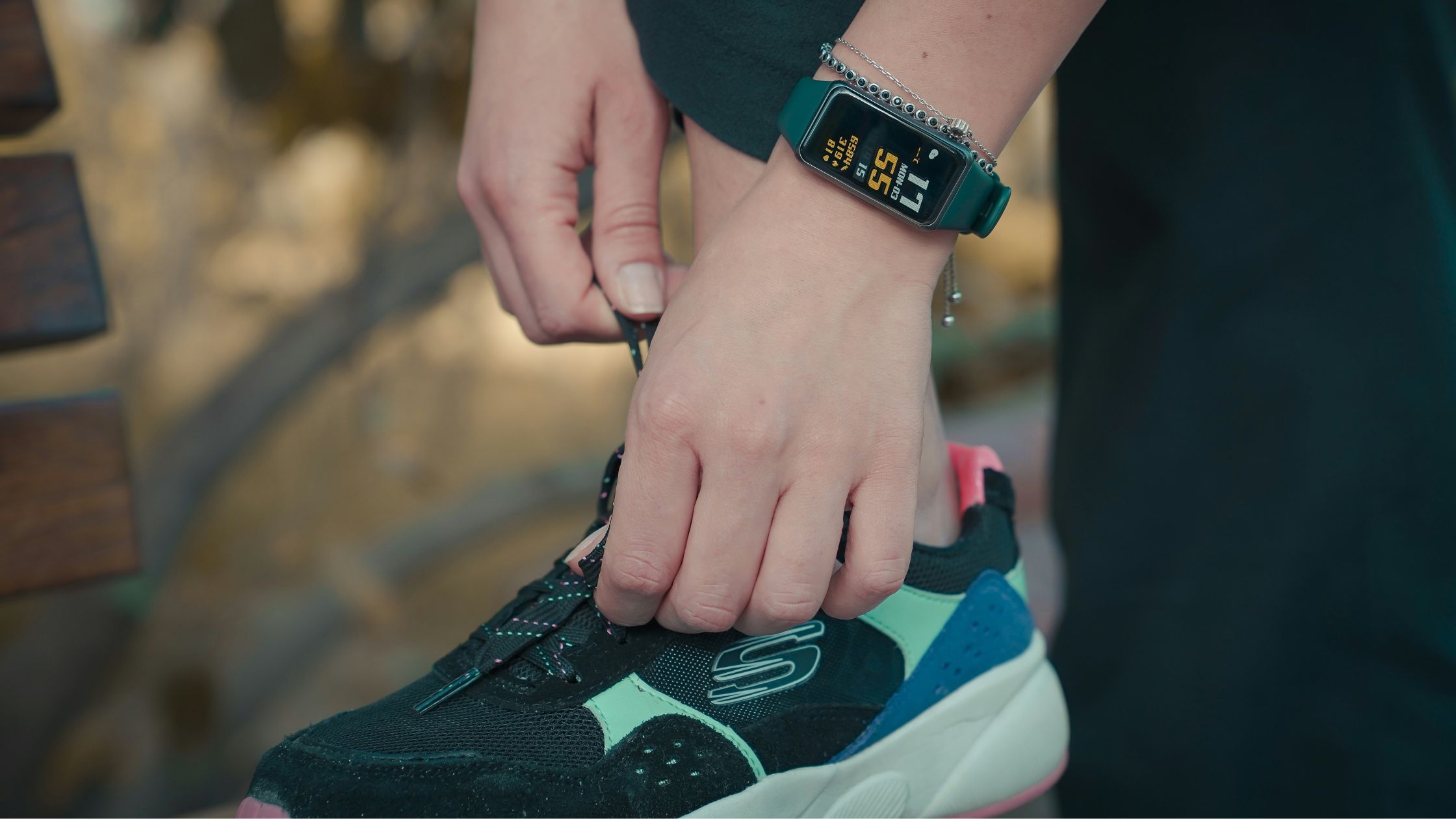
tying running shoes and using a fitness tracker
Embrace the new age of technology to improve your discipline. Photo via Onur Binay on Unsplash

In a world full of technological advances, we often feel disconnected and want to unplug, but technology can help you keep track of your progress and goals.

You have loads of fitness apps to track workouts, hire coaches and even get free workouts or walk trackers. You have apps that help you track your food and water intake too, linking to the fitness app if they don’t do both.

There are even goal setting apps that just help you write down your goals or track your habits.

Embrace technology, because you’re well-being is literally at your fingertips.

Learn to forgive yourself

Changing your habits and identity to make better choices is tough, especially with so many distractions, like festive season feasting. But, that doesn’t mean that you can’t enjoy it with everybody.

You need to learn to forgive yourself instead of feeling guilty and punishing slips in judgement or indulgence like those sweet treats over the holidays.

A good example is that when you’ve had your day of Christmas feasting, remind yourself that it’s just been a day and continue with your healthy path on the next. Don’t starve yourself or try and “work it off” but continue the good habits you’ve worked so hard on.

Getting motivated is easy while building discipline is the hard part, but it doesn’t need to be. Using these tips, you can become more self-disciplined and reach all of your goals.

Sources:

  • 17 Self-Discipline Exercises to Help Build Self-Control on  7 Feb 2020 by Catherine Moore, Psychologist, MBA
  • Job, V., Walton, G. M., Bernecker, K., & Dweck, C. S. (2013). Beliefs about willpower determine the impact of glucose on self-control. Proceedings of the National Academy of Sciences of the United States of America, 110(37), 14837–14842.
  • Identity-Based Habits: How to Actually Stick to Your Goals This Year by James Clear Goal setting, Habits and Self-improvement