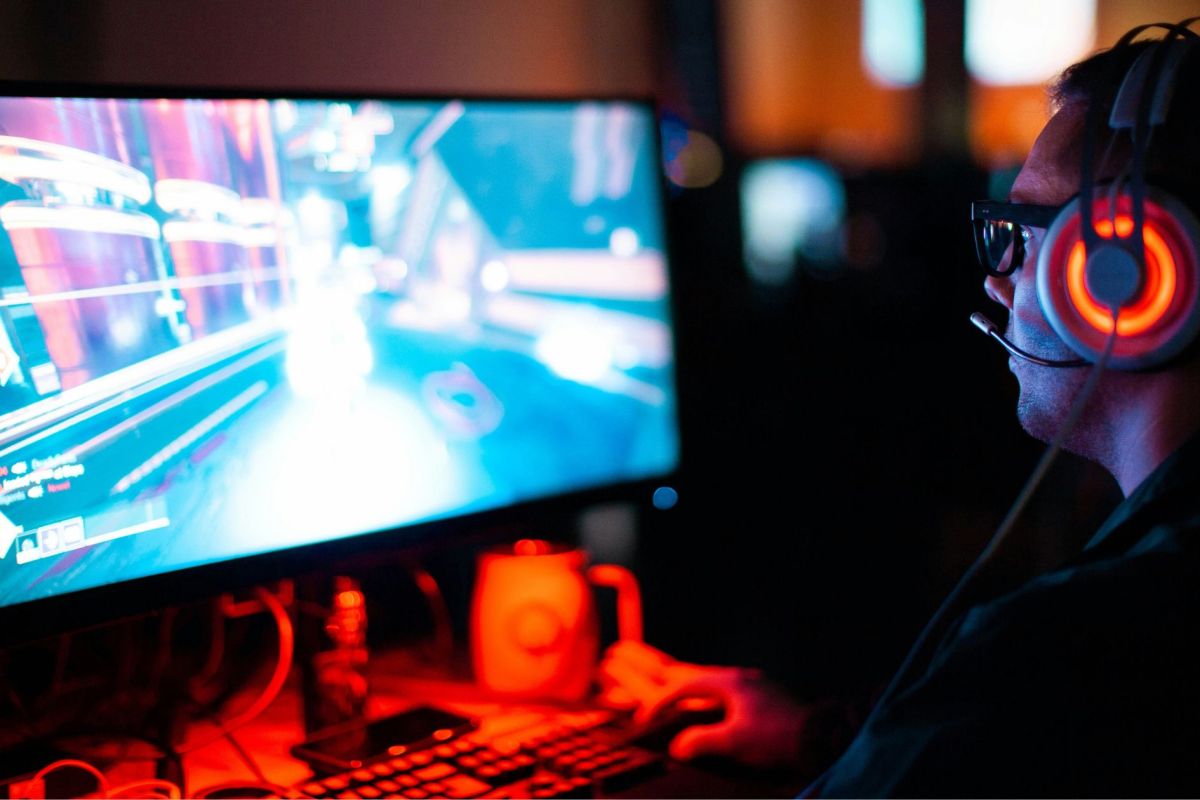
A lot is going on in the world of gaming and accessibility is one of them. We always want more people to play games and for a long time, people with disabilities or special needs were completely unable to enjoy any of these interactive works of art. However, we’re still not where we want to be with accessibility to play many of them but why does it need to change, other than just sitting in front of that screen?
As a visually impaired person, games have played a bigger part in my life since the 90s than people often realise. Being able to play games has provided me with skills to overcome some of the hurdles I was told would stop me from being independent. These games provided me with the opportunity to experience freedom most people might even take for granted.
Hand-eye coordination
We constantly need to interact with the world around us but not everything is static. We need our gross and fine motor skills to work well with our visual acuity and eye movement control (oculomotility). Being able to react to fast-moving objects on a small scale has taught me to be more vigilant about the world around me.
If it weren’t for games teaching me coordination, I would not be able to run the many road races including marathons on my own because I would not have been able to notice moving cars and static objects in front of me. I would barely be able to do my job as a personal trainer, seeing how people move and being able to correct my client’s technique. With all of these things, I’m able to notice and react appropriately more than I technically should be able to, according to those I knew at a young age. I could even go-karting with friends because I love racing games, and they gave me a good understanding of the mechanics without being able to see as well as everybody else.
Puzzle solving
Problem solving is a big part of most games. You are forced to notice patterns and find solutions to puzzles that prevent you from moving forward in a game. From a young age, being able to solve various visual, audio, verbal and language puzzles are a big part of growing up.
Games give anybody a chance to apply their intuition to new environments. These puzzles aren’t just for those with disabilities but anybody who loves games can enjoy solving these puzzles and feel more accomplished. They help us train our brains which of course is only a positive skills in the real world.
Stress-relief
The world can be a tough place to live in. Between a cost-of-living crisis, having a career that barely pays for anything, and a world that feels like it’s falling apart, we need some catharsis.
Being disabled makes it even tougher as well-paying jobs are less accessible, it’s harder to make friends because we’re not out in the world, and doing basic things every day that others do naturally can be very frustrating. By being able to jump into new worlds with incredible visuals, stories, and characters, we can find a place to control our outcomes. If we’re able to have access to more games with controls and settings that help with some of the basics, we can get lost in those worlds for a while and forget about what’s stressing us out.
Having maps in the same place each time, larger text, colour blindness settings, audio cues and even braking zones in some games make a big difference to how much fun we can have. These accessibility settings also don’t affect those you play with and against.
Making friends
For many people with disabilities, going outside and meeting people has more challenges than you might think. Whether it is cost, general disability access, or just confidence to put yourself out there, meeting people is much harder. There are many basic activities that are just not accessible for many with disabilities and they can be as simple as hiking. With games being more accessible and those games having online multiplayer modes, you can meet people from all over the world who you can team up with or play against.
Personally, just getting around is tougher because I don’t drive but for others, it can be even harder because e-haling might not be accessible or buildings and companies don’t make it possible for people with disabilities to even participate in activities.
Games make it possible to just jump into games with friends any time of day without worrying about cost or time. Nobody cares about how you look or where you’re sitting; as long as you are a friendly presence and enjoy your time with a group of buddies.
These games we love really are more than digital landscapes; they are worlds where we can escape to, live in and interact with people we would never get a chance to. They are an escape from daily frustrations, provide us with puzzles to decipher and give us skills that help us become more interactive, and independent, in the real world.
 Cyclops Creative